Sunday, September 12, 2021

Kuhaku/ Intolerance - Dir. Keisuke Yoshida

Q: First of all, I want to say it's amazing. It made me feel glad to be alive and gave me light.

A: Thank you very much.

Q: The main characters were all impressive and stuck in my mind. What did you pay special attention to in terms of casting and direction this time?

A: The main cast is made up of famous people, but I wanted to work with only people who are really good at acting for this film. It may sound bad to put it this way, but I didn't want to cast people just because they were popular. Of course, Furuta-san and Tori are very good actors and very popular. Basically, I cast them based on their skill in acting and whether they fit the role or not. 
Thanks to that, I was able to watch the whole thing without directing. The shooting progressed so quickly that I went to onsen in between takes (lol). I went 3-4 times. I even took a nap once. I guess that's what happens when you choose a good actor. Moreover, if you have people who are good at acting, it's okay to include idols, or people who don't have much experience. If they are surrounded by good actors, they won't act strange. They won't overact and become natural. 
A: When someone who is not very good plays the leading role, everyone follows suit and overacts. This time we had only good performers, so it went very well.  I asked people at workshop to join this time. The one who played Natsumi had no experience in acting, but even Terajima-san asked me, "Where did you find her?" 
About Arata Furuta

Yoshida: I had a line to convey the theme of the film. I wrote the script with a sense of leaving an impression on the audience by saying it memorably. However, Furuta-san didn't say the line in a memorable way, but rather said it quite normally. By then, I realized that people don't really say things that seriously. I learned to trust the audience ability to understand the message without saying "Sir, here I'm saying an important line right now!" 
Q: Just when Furuta-san was standing, he looked so intimidating that I feel numb.

A: I was also impressed. The paramedic was watching the scene on monitor behind me, and he said, "Wow! how he could do it like this?" I think you can't become like that by working hard. It's not about acting skills, but about being the "chosen one". I think he knows how he should look in this film, so he knows how to keep it from looking fake. 
About Tori Matsuzaka

I think Tori thought of various ways to see things in his own way. He can portray the characters in a very grounded way. I don't like people who get overwhelmed. This time, too, he is very skillful in just being normal, without expressing anything excessive. 
He's a top actor in Japan and has won awards, but on the set, he's like a 20-y/o rookie who says, "This is my first time in a movie". He's so humble and soft-mannered. He always says everyone "Onegaishimasu!"
So, in a good way, he doesn't feel like a leading man at all. That's why neither the staff nor I are nervous around Tori at all. But when the camera rolls and he starts acting, he suddenly changes. I feel so every time. 
Furuta-san and Terajima-san's roles are like monsters. You'd think Tori doesn't look like someone who can compete with them but he can face them perfectly when the camera rolls. People say he worked hard to get to this position, it's true but I think he's actually talented. 
Meaning of Kuhaku (Blank)

It has various meanings, but the most important is what is going through Soeda's mind after losing his daughter. Before "Thicker Than Water (2018)," my partner who I wrote the script with, my only friend and business partner passed away suddenly. I think writers sometimes let out what's inside of them when they write, but when I was making "Thicker Than Water", I felt bound by something. When I was thinking about what that was, I realized that I hadn't come to terms with it. 
"What does it mean to come to terms with something, and is it even possible to come to terms with something?"
That's what I decided to write about in this story. 

Tuesday, September 7, 2021

Kuhaku - Tori Matsuzaka, FLIX

On performing Aoyagi

I'm sure there are many people who feel like Aoyagi. So, rather than creating a character, I worked on facing Aoyagi, thinking about what I would do if I were in the same situation.

Image

I approached as if I were Aoyagi, I would have this kind of expression on my face, or I might make this kind of choice. The fact that I was able to perform the role while making use of my own reactions must mean Aoyagi has elements of "ordinariness" which apply to every real person. Playing Aoyagi, I thought it was really difficult to perform an ordinary role. He doesn't have any outstanding characteristics or archetype. But real people are not that simple or easy to understand. 
Aoyagi has a suspicion following him, but I thought that it'd be better to prioritize the emotions that come out in him at the atmosphere of each scene, instead of leaning on that suspicion. If I were conscious of it, I might rely on and end up expressing differently. 
About Shinobu Terajima (Kasukabe)

Tori: She really cares for Aoyagi, but she steps into people's lives as close as Soeda does.

Q: You two had a one shot breathtaking scene. The director said he didn't originally intend to make a single cut, but the two of you were so amazing. 
Tori: Even if we shot it again, we might not create the same level of intensity. So it was just made one-cut. Dir. Yoshida's set is usually very cheerful, but this scene was very tense. There was so much chaos in atmosphere that I don't know which tension to compare it to. We probably rehearsed that scene 3-4 times, but we filmed this in 2020 spring, when the first state of emergency was about to be declared. We were under a huge pressure of not being able to return so I honestly have no memory. 
Tori: At first glance, Kasukabe is very nice, but if you provoke her, she seems to get a little violent. It was like an inflated balloon that bursts when it hits something sharp. (lol) 
About Arata Furuta (Soeda)

Tori: Both Terajima's Kusakabe and Furuta's Soeda had terrifying intensity and were really scary. They had different kinds of scares, but ...... they were both scary (lol). Kasukabe seems nice but Soeda, on the other hand, would be quite powerful. Furuta-san is amazing, isn't he? Soeda in the movie is very strong. There's a scene where he's standing straight up outside a supermarket, and just standing there is scary. It's like silent violence (lol). Furuta-san likes to drink. There is a scene where Soeda is waiting for Aoyagi. When I come out of the locked supermarket, he was drinking a can of beer. I couldn't tell in the short period of time whether the beer can was a part of his character's preparation (lol). 
About Director Keisuke Yoshida

Q: The power of actors can be felt in this film. When I saw Dir. Yoshida on the set of this film, I could see that he has a lot of trust in his actors, even in scenes with detailed emotions that require many takes. He is also very precise. 
Tori: He's a happy-go-lucky guy, but he really understands the performance in a very delicate way and cheerfully tells us things like, "Let's make the intensity a little lower than it is right now," or "Let's try something with a little more anger. So I can challenge him positively by saying, "Well, I'll try it like this next time," rather than giving him a bad impression. 
Text about director's comments on Tori

Q: Dir. Yoshida refers to Matsuzaka-san as a "Reacting Master". He said "During filming, actors asked to do the same thing many times, including tests, so it's natural that I get used to it, but with Tori, no matter how many times I do a take, there's a freshness to it, as if he's hearing my words for the first time. At the same time, he is able to create the character properly." During filming, when it was his turn, the assistant director would say, "Matsuzaka-san, I'll call for you soon." and he'd already be there. I'd asked, "Tori, how long have you been there?" He smiled and said, "I've been there for quite a while". Even when the actress who played the interviewer for the TV show was so nervous about her first movie shooting that she made a mistake, Tori smiled and said, "It's warm today. It was so cold yesterday, right?" 

Q: I have the impression in recent years, Tori Matsuzaka has been choosing films that require a lot of commitment, dense and bold. Do you spend more time on each work than before?
Tori: It would be nice if I could, but right now, I want to challenge myself with various works. 
Q: I'm sure you've been pushing yourself very hard, especially since you've been able to complete so many difficult projects without additional time.

Tori: Yes, I am. I have to keep pushing myself. I guess I'm like an athlete (lol). 
Q: Returning to "Kuhaku, Soeda, who cornered Aoyagi, seems to be a villain, but he is actually a reasonable person. And even Aoyagi has moments when he seems to be the bad guy. The audience is continually shaken. That makes the film very exciting. 
Tori: It's really exquisite, right? The way people behave, if they stray from the line even a little, they instantly seem villain. I think that's this film comes from. The same person can be perceived as good or bad depending on how they are viewed and from what perspective. We live in an era where there is a lot of information, that is why I think it is important to be aware of not leaning on one side too much. It's easier to lean on easy-to-understand information, like deciding one side is the villain. I think it's so dangerous. 
This film is about an incident, but I think this kind of thing can happen in the most trivial places in our daily lives. With the eyes of the people around us and our own consciousness, we can create truth that should really be one and the same. 
While some people overstep into people's lives, some people don't involve with people at all. In between, there are those who want to step in but cannot. What will be the end of this film, which seems a condensation of modern society? 
Tori: Lastly, I want to share the words of Dir. Yoshida. He said:
"Aoyagi is a normal person in my opinion, but I think people like that are easily misunderstood since they don't say what they mean even if they have something to say. Nowadays, I feel that the world is becoming more difficult for people like Aoyagi to live in. When an incident like the one in this film is spread on the Internet, people will say whatever they want. The truth is that people who say unproven things are more dangerous. But now there's a tendency that people who don't assert themselves are perceived as worse than those who do. I think, nowadays, in real world, many people are like Aoyagi who can't say what they want, but in the internet, everyone is Soeda. That's what I find strange."

<END> 

Sunday, August 15, 2021

Korou no Chi LEVEL2/ Last of the Wolves - Tori Matsuzaka and Ryohei Suzuki

Q: How is it like to lead this film?

Tori: On 1st day, I felt I wasn't leading the film as leading actor. It was not right for me to think of myself as leader of this team rather we all have to work together make sth better than 1st one.

Image
Tori: Me, Ryohei-san, and Nijiro-kun stayed in Hiroshima most of the time, while the others had to go back home immediately after shooting due to their work. So, I told them: "Please throw everything you've accumulated into this! I'll take it all in!" I was hoping that everyone would leave after exhausting themselves. I thought that kind of energy would lead to the power of this work. When I saw the completed film, I was very happy to see how the senior actors were enjoying themselves. Knowing the power of the previous work, I think they were like, 'We can go this far!" 
Q: What is your "justice" as actors?
Suzuki Ryohei: I think there are times when the work you are involved in or the performance you give can hurt people. So, I think the moment when I can deliver a positive impact, such as healing someone's feelings, connecting them to the power of life, or making them feel happy, is the moment when the justice in my work came to life. 
ImageImageImageImage
Tori: My kind of justice is to bridge the gap between the work and the audience so that the message of the work and what is underlying it, can be delivered to the audience. So, I also do things like interviews and promotions. It's my way of bridging the gap.
ImageImageImageImage


About the shooting accident during the fight scene

Ryohei: As I was doing it, I wanted to hit him one more time. Actually, I shouldn't have because it's dangerous. But I thought Tori would be able to handle it.
Image
Tori: Action is like a conversation. It might be easier for both of us to respond to each other and take it as a change in the subtle nuances of the dialogue.

Ryohei: I don't do this with actors who are working together for the first time. We have a relationship of trust. 
Tori: I think this film can certainly be called "LEVEL2". It's a film full of enthusiasm that we created together without being too bound by the previous film. 
Ryohei: I think this will be my masterpiece without a doubt. Like Terminator/ The Dark Knight, I think antagonists are important in the second film. How do you attack the protagonist and hunt him down? I am honored to be that antagonist of the second film. 
Q: Any wish?

Tori: I wish Yakusho-san see this.
Ryohei: He's already watched.
Tori: eh?
Ryohei: I met him when I went to see a stage play. He told me "He watched and it's great." 

Korou no Chi LEVEL2: CinemaToday Report - Tori Matsuzaka

1. Portrayal

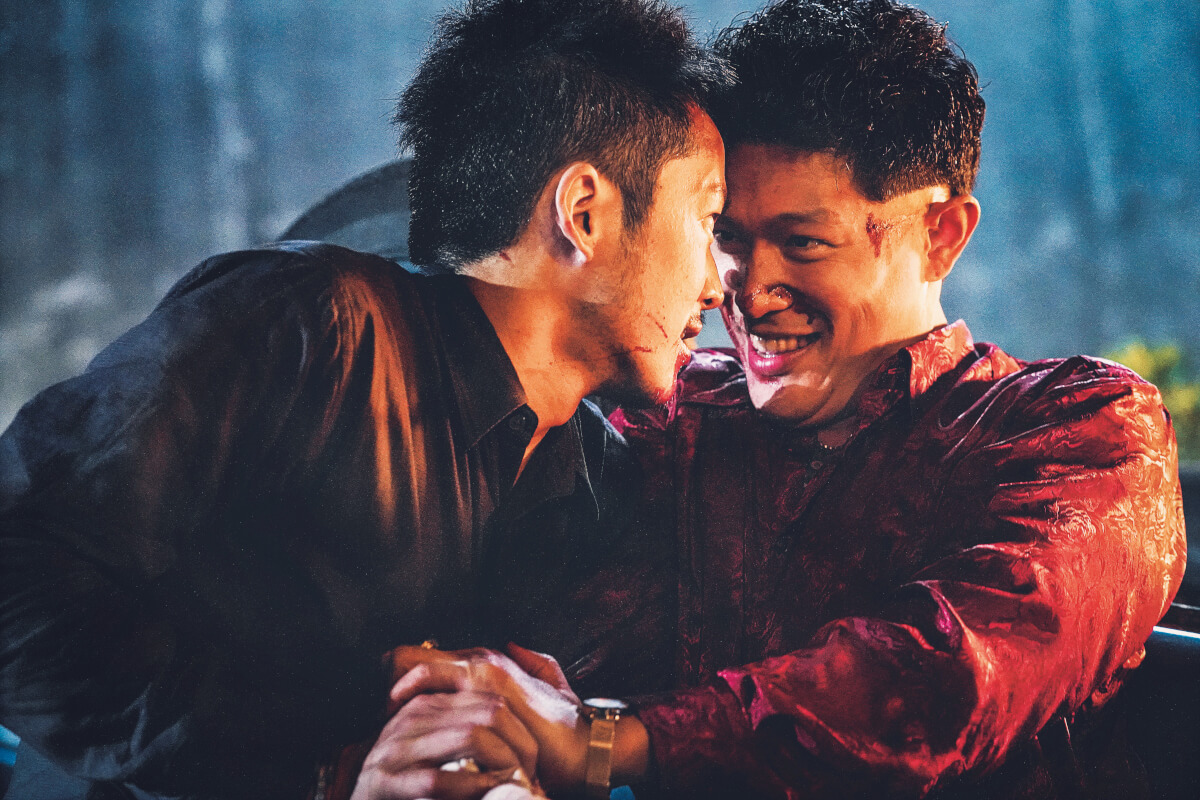
Trapped by both Yakuza and the police, Hioka's energy is tremendous as he tries to pursue justice while turning a blind eye. His desire to avenge the murder of Gami is conveyed throughout the film without the need for explanation in dialogue. 

2. Relationship with crew
This film is a completely original story by screenwriter Junya Ikegami. As it's a completely new story of Hioka, Matsuzaka must have felt not only the pressure of "sequel" but also the pressure of playing the lead role and taking over from Koji Yakusho. Nevertheless, Matsuzaka remained considerate to the staff and co-stars throughout the film. While showing a gentle appearance, he continued to play the role of Hioka with earnestness and sincerity. 
3. Schedule arrangements

Matsuzaka joined the crew late on the 6th day of shooting, Dir. Shiraishi later said that this created the best chemistry between Matsuzaka and Uebayashi (Ryohei Suzuki). 
During these 6 days, the main scenes were Uebayashi clan and they had completely taken over the set. As the film was shot in Hiroshima, Uebayashi clan became more and more unified. Suzuki, together with the young actors of the clan, welcomed Matsuzaka with all their might. 
Uebayashi (Suzuki), welcomes Hioka with a "I've been waiting for you" attitude, and Hioka (Matsuzaka), who arrives on the scene full of energy, also challenges them with a fearless smile. This created the unusual tension that pervaded the screen. 
4. Action Stunts

In the previous film, we didn't get to see much of Hioka's illustrious career as the karate club member at Hiroshima University, but in this film, we witness his physical strength. 
One week after Matsuzaka arrived on set, the scene where he falls through the glass from a 10-meter high building onto the roof of a police car was shot. The scene was filmed in several parts. It began with him breaking through the glass and jumping out from a room on the third floor of the building with a wire attached to his body. The film crew then moved to the outside of the building and shot Matsuzaka falling on the roof of the police car onto the lights. 
For that scene, people from the action team pulled up Matsuzaka's body wrapped with a harness, and with the command "1, 2, 3!" they loosened the rope and slammed him against the roof. In fact, there were no cushions on top of the police car, so his body was repeatedly slammed against the roof. Dull thuds echoed conveying the impact. Matsuzaka repeated many times without making a single whimper. 
5. Final Duel

The duel between Hioka and Uebayashi was filmed on the 28th day of shooting, just before the crank-up. The scene was shot on consecutive nights at a site in a port area in Hiromachi, Kure City. 
Despite the tension of the important scene, Team Shiraishi always maintains a friendly and good atmosphere, which is the charm of the film. Director Shiraishi, his eyes shining, smiled and said, "Well, it's finally here!" 
On the other hand, Matsuzaka Tori and Suzuki Ryohei repeatedly checked their action moves as they waited for the call to shoot. Once they start acting with emotions, they don't have time to think about the movements one by one. Therefore, they have to keep practicing until their bodies move by themselves. The intensity of this duel is hotter than a blazing fire that I wanted to watch repeatedly. Matsuzaka, who went through the filming during Covid with the crew, welcomed the crank-up with a happy smile. 

Korou no Chi LEVEL2: CinemaToday Report - Ryohei Suzuki

1. Role Creation

Dir. said he created the role carefully during lockdown and slowly created Uebayashi's visuals. His hairstyle wirh no sideburns is Suzuki's idea.

2. Uebayashi's childhood house

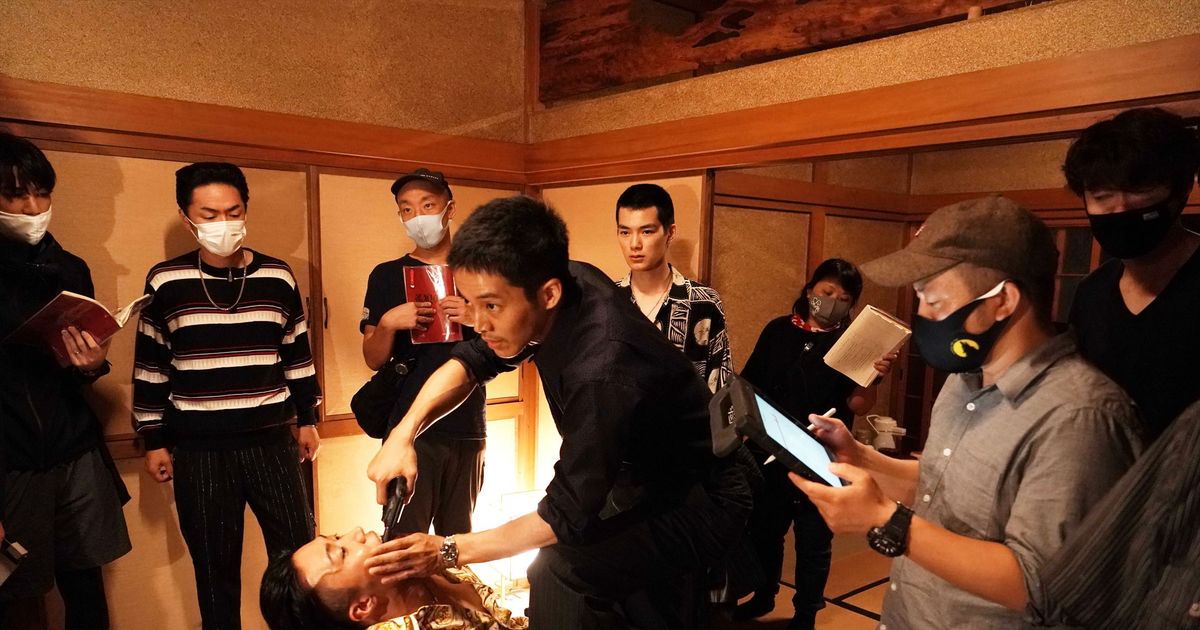
The key to Uebayashi's past in the film is the house created by art director Tsutomu Imamura, who won the 42nd Japan Academy Prize for Best Art Direction with "The Blood of Wolves (2018)". Imamura said about the set as if he had known Uebayashi since he was a child, "His father was a terrible violent man and he was always drinking. He lived in a ramshackle tenement where the wind and rain and everything else could come in." Even the props in the room were carefully selected to create the world in which the character spent his days.
Suzuki: I've heard from staff the day before shooting that Imamura has done an amazing job with the art in the house. This is the place where the monster was born, so I'm really looking forward to seeing what I can feel there. 

On the day of shooting it was not only Dir. Shiraishi who was very impressed. Uebayashi, which Suzuki had prepared over a long period of time, gained even more depth when he stood in the space created by Imamura. 
3. Suzuki's leadership

In the old days, actors playing yakuza roles at Toei Studios would walk around the studio in gangs just like the roles they played. Suzuki and the members of Uebayashi clan formed a bond during filming that recalls such a legend. Suzuki was always in close conversation with the actors playing the members of the clan, not only during his performance, but also on the days when scenes of the clan were to be filmed. 
Particularly in the first half of the film, the actors in Uebayashi clan had to face the veteran actors such as Takashi Ukaji, Susumu Terashima, and Kotaro Yoshida, all of whom have their own unique auras. That's why Suzuki Ryohei kept inspiring the young actors, and the actors who listened to Suzuki's advice with gritty eyes were filled with the determined spirit as the performance approached. This bond made the lonely existence of Hioka stand out even more. 
4. Each of Uebayashi's lines, made up in a variety of expressions, is so cool that you want to imitate it. This is because Suzuki has sublimated him into a role to give the audience a complex feeling of being convinced of his righteousness even though he is a crazy dark villain. Why are we so attracted to him when he is so violent and terrifying? I am sure that many people who have seen this film will say, "Ryohei Suzuki was awful." He is truly the best villain in the history of Japanese cinema. It is due to the passion of Suzuki, who continued to face the role with sincerity and put everything into the film. 
I hope you will enjoy Suzuki's best and scariest performance ever, as he unleashed all the energy he had accumulated after the period of self-restraint. 

Korou no Chi LEVEL2: CinemaToday Report - Nijiro Murakami

He said Dir. Shiraishi at a film festival "I want to be in your film!" Dir. Shiraishi remembered and chose him for difficult role and praised "I fell in love with his innocence and natural talent like a wild child."

2. Kure-dialect
This is his second attempt after KonoSeka but the 90s spoken style is completely different. Issei Okihara, Kure-ben coach, said, "I'm always amazed at how quickly Murakami masters his lines. His ears are very good." 
3. Murakami was the youngest, his natural friendliness endeared him to the staff and senior actors. He seemed to be relaxed and chatted with the staff right up to the performance. But, the moment he entered the scene, his eyes lit up and he was not Nijiro Murakami, but Chinta. Dir. Shiraishi said, "Nijiro-kun is a really strange actor, and he jokes around with the staff right up until very last minute, so I was really worried about him at first (lol). I was shocked to see how he switched on. His instantaneous power and concentration were so amazing." 
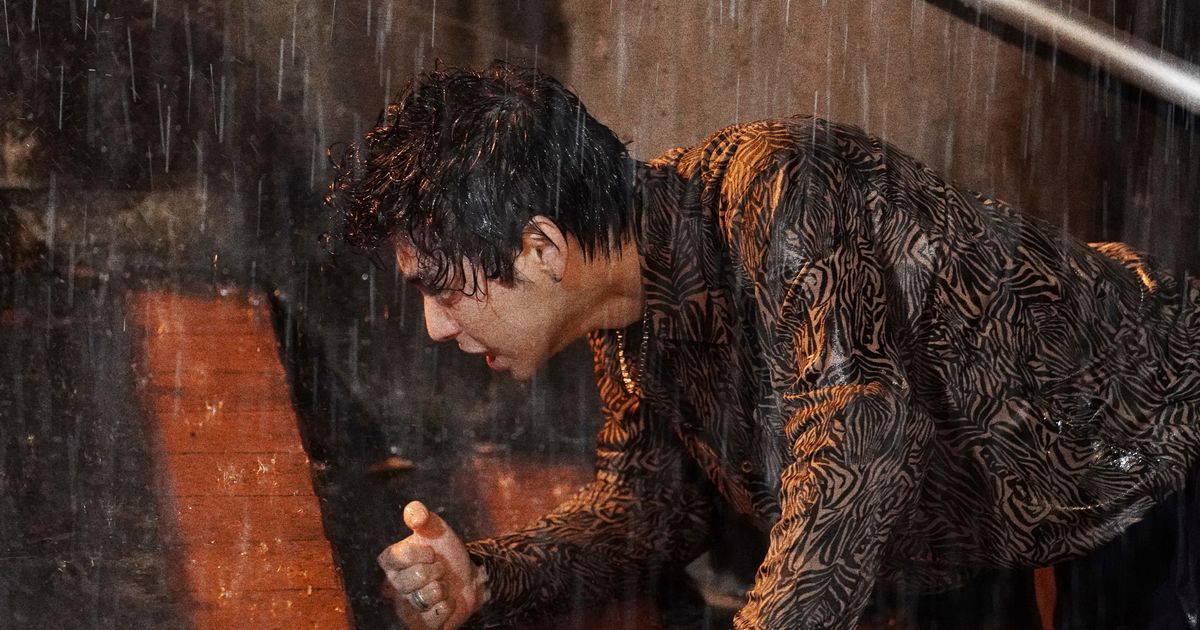
4. Murakami's overwhelming presence is particularly evident In the scene of Uebayashi and him in heavy rain. Minoru Kawai, lighting designer, said, "The rain in Team Shiraishi is many times more intense than the rain in other films, so all the first-time actors are surprised. It was mid-October, cold enough to need a stove that night, but the rain continued to fall relentlessly for over three hours of shooting. Murakami was drenched for so long. He couldn't even change out of soaking wet costume and was shaking when the camera cut. Since the scene was very important for the film, Dir. Shiraishi didn't give an OK. The staff even teared up watching him shoot."
The way of life of Chinta, who is tossed about by a harsh fate, at the risk of his life, is sure to touch the hearts of the viewers