Friday, March 11, 2022

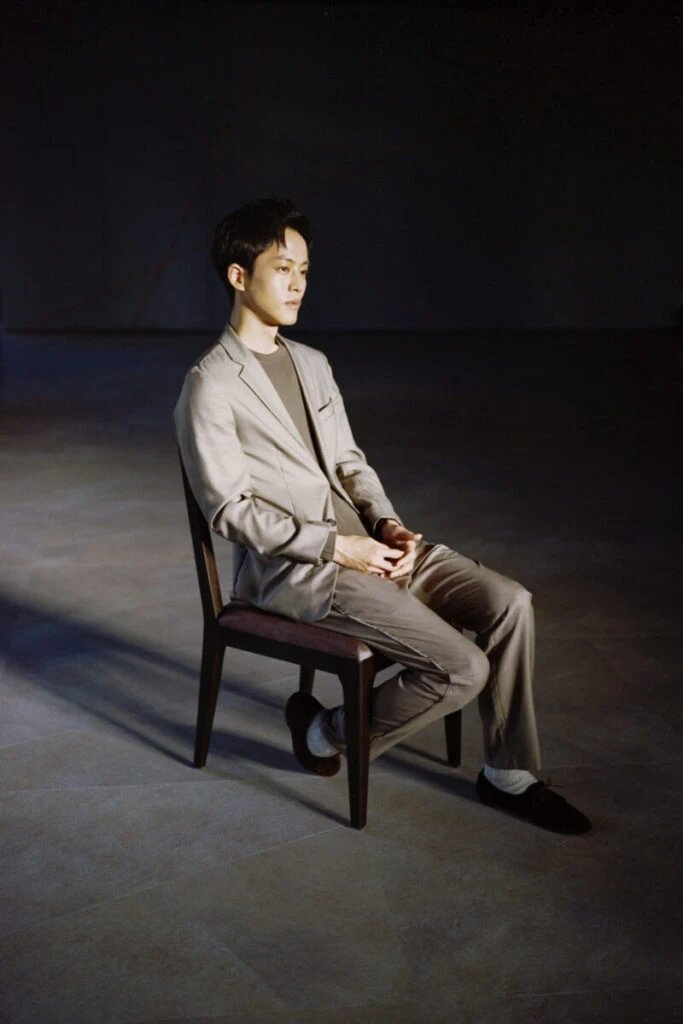
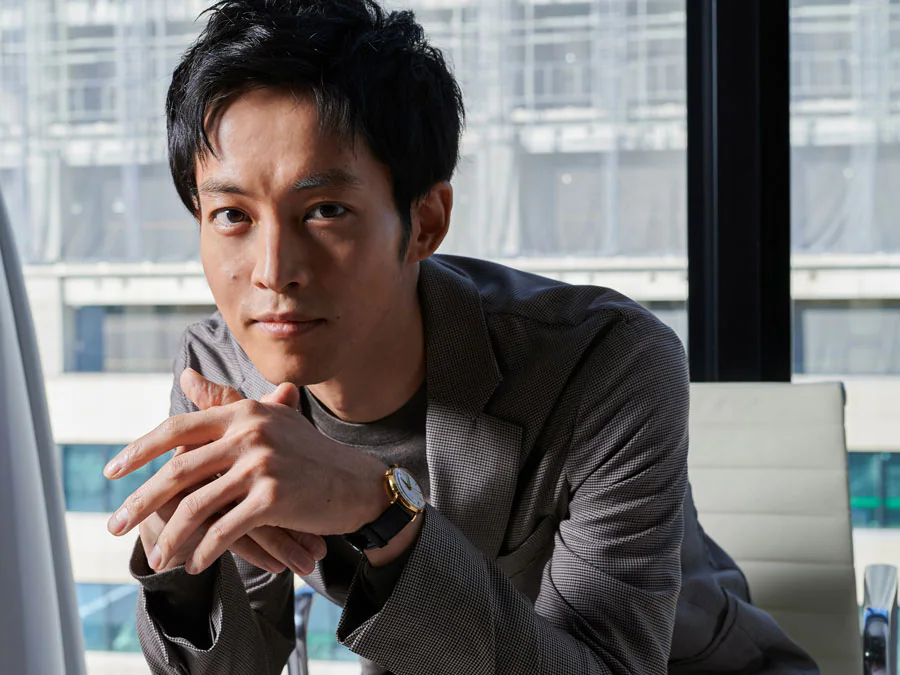
MELLOW FLAME - Tori Matsuzaka

Q: In the book, you wrote about relationship between Maro and Hono (flame). Taking Hono as heat, or desire to create/express, is this a story about the creator and his motivation. Do you yourself experience fluctuations in your desire to express?

Tori: Yes. I think I'm a pretty uneven type of a person, and I think I'm sometimes high like "Okay, let's do it!" , and sometimes, I'm all low. I still wonder why I can't control it.

ImageImage
.
Image
Q: You've been able to manage them up to now.

Tori: Some people are good at turning the switch on and off, but I have a hard time doing it (lol). I have tried various approaches in the past to see how I can switch it on and off when I enter a project. For example, for Rurou no Tsuki, I tried sleeping on the filming set.
Q: I heard you stayed at a hotel in Shibuya to prepare for your role in the movie "Call Boy" and ran simulations for your role in "Intolerance".

Tori: Yes. I do different ways, but I do it for each work.
ImageImage


ImageImage
Q: I also felt from this book that you're always looking for opportunities to ignite your own desire for expression. But you always talk about the importance of "becoming the work". If that's so, it must be contradicting for you to express your "self" as an expressive person.
Tori: Yes, when I participate in a production, I leave my "self" behind. But it's probably just "myself" up to the point where I attempt the work. The choice of the project is the same. Once I participate, I do my best to blend in with the work, as you said, but I have already thought about how I will approach the work, and that kind of "self" decision has already been done before I entered the production.
I've no idea where I want to end. When I think about how I can continue this job, I realize it's all about discovery. I have a theory that if I can discover something new at each project, I'll be able to go places I never imagined. I'm currently exploring this possibility.
Image
ImageImage

Image
Here's his interview in 2012.

• • •

Thursday, March 10, 2022

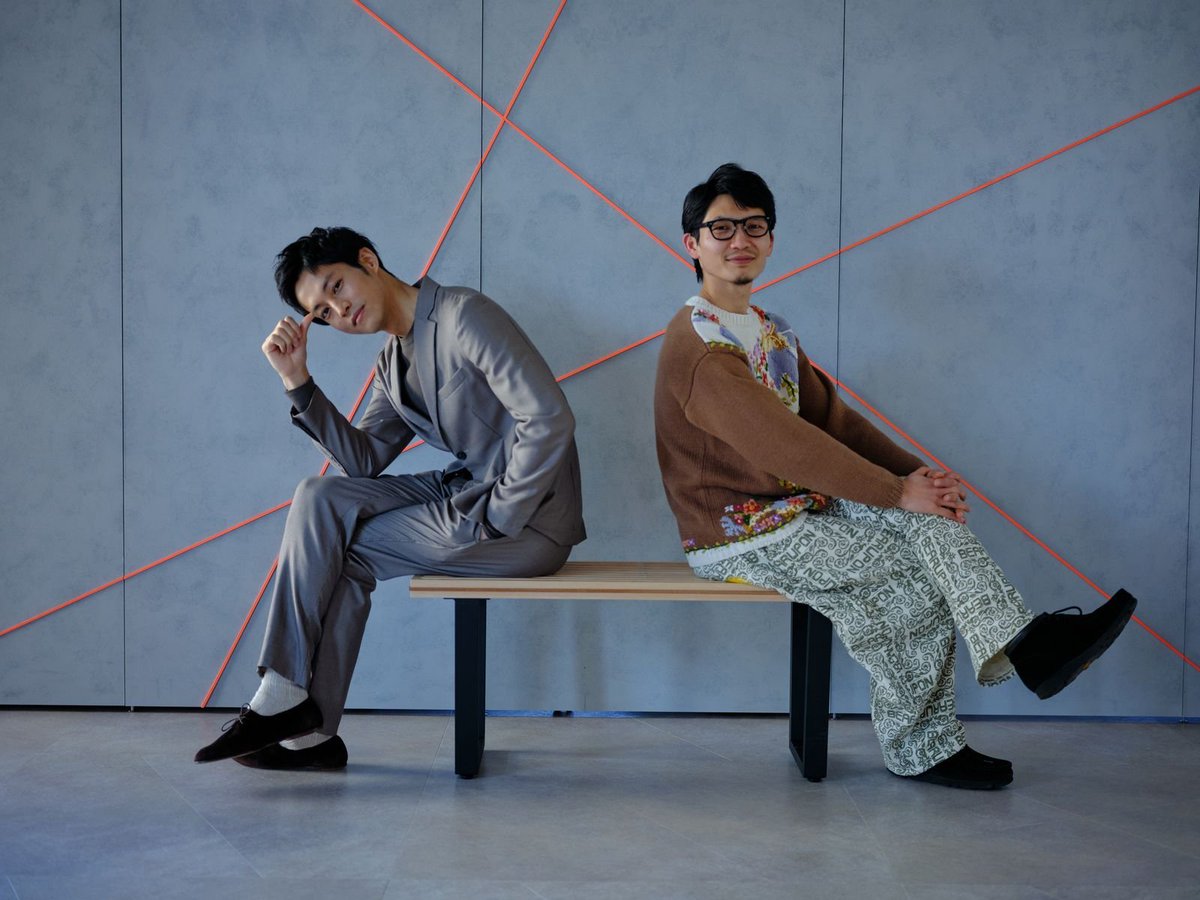
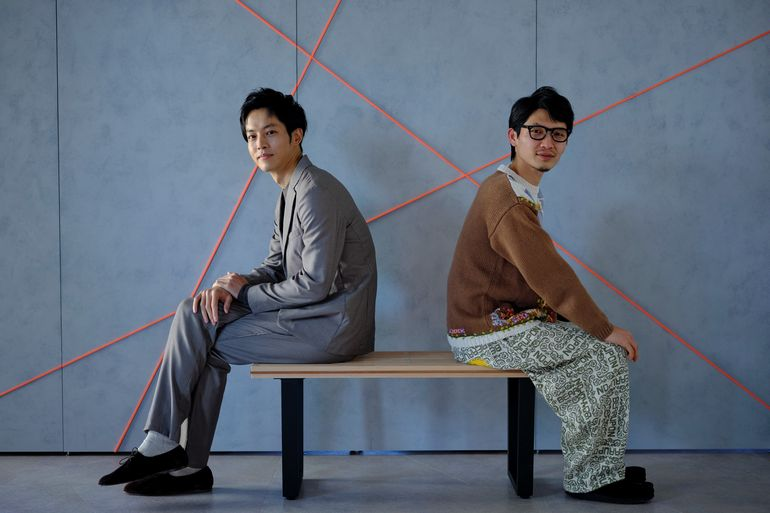
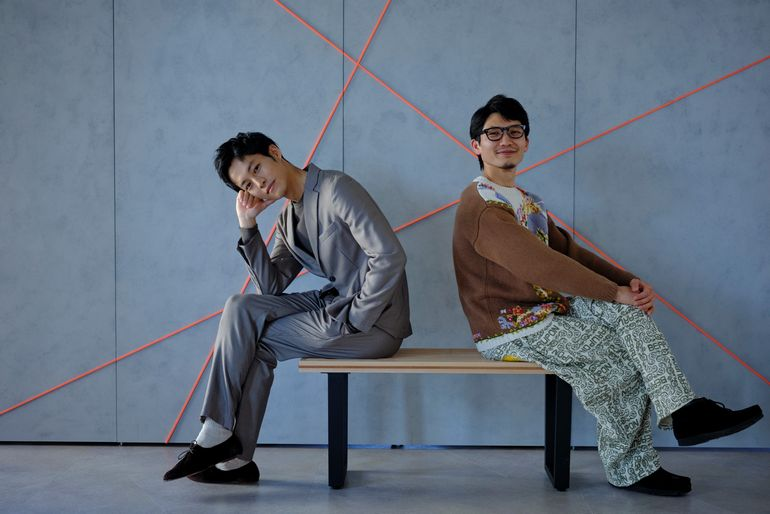
MELLOW FLAME - Tori Matsuzaka X Shinsaku Nagata

Q: How did you do the production of the book?


Tori: Everything I talked about, from the trivial to the absurd, was materialized by Shinsaku.
Image
Shinsaku: It was the first time in my life, very interesting. It was a completely new challenge for me. I draw the piece and he did the text. I was even more surprised when I get the feedback from him. We exchanged back-and-forth.
ImageImageImageImage
ImageImage

Thursday, January 13, 2022

Tori Matsuzaka (PLAY BACK 2021)

Tori said he doesn't think Lee Sang-il is tough. Instead, he thinks the opposite. He said Dir. Lee always give actors proper direction and checks how much preparation is done. If he can do that exactly, he gets OK right away.

Image
Tori: I feel like things I've done in the past that I thought useless were useful in the actual performance because Dir. Lee Sang-il pays attention to whether I'm doing those things or not & he values even the smallest details. I'm glad I trusted him because he noticed me. I'm happy (at Rurou no Tsuki filming). It was as if I kept doing things that had nothing to do with the role. People might ask is it worth this much time and effort every time. But that's what I've always wanted to do, so I just kept on working. It's what you don't see on camera that's important. If I don't have a firm understanding of these things, I can't dive into the world that Dir. Lee is depicting. 
I want to work on works that I can really offer with confidence. I'm not going to take a break but change the pace and focus more on my work. I'd like to have gained acclaim overseas by 40. Not appearing in foreign films but have more of my JP films seen by ppl overseas.  I've done some projects that I thought were turning points in the first half of my career. Perhaps in 2-3 years, I want to come across a work that makes me feel that way again, but by then, I need to be able to handle it better. 
Q: Have you enjoyed the response from Last of the Wolves and Intolerance?
Tori: No, I haven't. I was so busy filming.

Q: LEVEL2 draws a lot of female viewers to Yakuza films.
Tori: It's cuz (Suzuki) Ryohei-san's casting was a success! I'm glad to win Yokohama together with him. 
Q: You having the leading role dramas in a single season was a topic.

Tori: I thought seeing "Tori Matsuzaka" twice a week would be too stuffed. Since I had already finished filming KokoBoku, I tried to make a slight difference in the way I approached the role for AnoKiss. In both cases, the character was pathetic, so I had to make sure that I provide a different kind of patheticness. 😅 It's not often that I play a role while thinking about that. I'm pleasantly surprised they both were very well received. 
I'm glad KokoBoku is just 5 episodes. It has a lot of punch, so if it's 10 episodes, it might have been too much. I was really surrounded by all the heavyweights. While I was just standing around, tremendously interesting performances going on in front of me. They show me so much more than the script, I just have to be there. I thought to myself, "How much of their performances can I take in?" I was blessed to be in an environment. 
In AnoKiss, I worked with two very talented actors, Kumiko Aso and Arata Iura. Aso-san has cool sex appeal and Arata-san has gentle sex appeal. By switching the two, we can see two different kinds of sexiness at the same time, which was a perfect match. It was so wonderful to be able to enjoy the roles and sexiness that the two of them created together right in front of me. Iura-san was so cute. 
Q: Congratulations on your Best Actor Award at 43rd Yokohama Film Festival. Now, you've won all individual awards.

Tori: Thank you very much. It's been 10 years since I won Newcomer Award, so it's very moving. I was very happy to receive Best Picture for "Intolerance" as well. 
Q: "Intolerance" is also a highly acclaimed film.

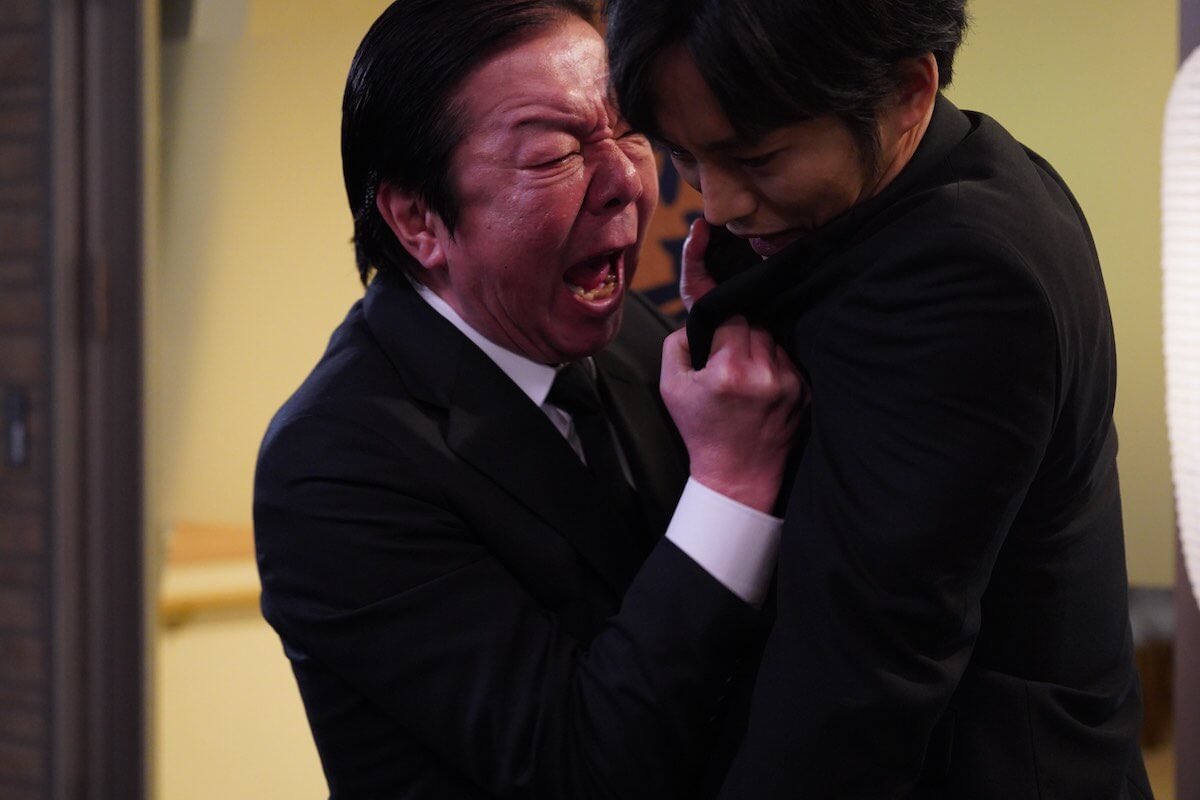
Tori: I think Intolerance is completely the director's achievement. I thought (Keisuke) Yoshida is amazing. After watching the preview, I strongly felt that I was lucky to be in a film with such taste. 
Q: I think Matsuzaka-san's exasperation in Intolerance is great.

Tori: Hahaha! Interesting! The script was very realistic. It was structured in such a way that anyone would be frustrated by this process. the emotion of frustration is the key and it's a very delicate element. 
Q: Matsuzaka-san was wonderful. (*2nd time cueing 🤣)

Tori: I'm so glad you thought that. The triangle between Arata Furuta and Shinobu Terajima was also very frustrating. And I can't take out my frustration on people like the characters played by those two. That's the point. When you're stuck in a situation where you can't take out your frustration, you get even more frustrated, so you end up taking out your frustration on trivial things. I came to understand that very well. 
Q: The way you expressed that was superb. (*3rd Time cueing 🤣)

Tori: Dir. Yoshida's stance was, "Please go ahead and act as you like" so I was able to act freely. I thought that "Intolerance" is a familiar madness. It's a dark film, but it's a story that could be right next door. 

____________INTERVIEWER GIVES UP___________LOL 
Tori: Like The Journalist/KokoBoku, I want to continue to work on the projects that throw stones at the world. I want to make them available. I want to create a genre where ppl who have seen can voice out their opinions to each other and recommend "I want you to see this." Of course, I like entertaining movies, but as I've gotten older, I feel my interests have changed. I think I like films with a lot of ambiguity. Maybe, I want to think about 'this and that' after watching a film. It's a big thing to be able to feel my own opinion again. 
Q: Last year, you said 働 (work) as your kanji, how about that?

Tori: I've really worked too much. I want to have some spare time this year so 据 (situate/settle). In my 20s, I was desperate to become famous, to get into film industry. I did various things. Cuz of that, I think I can broaden my span in 30s. All thanks to Naito-san (N-mane). I'm going to settle this year with promising collaborations. Think it's finally time for that. 

Thursday, November 11, 2021

Rurou no Tsuki - Director Lee Sang-il (Part 2)

Director Lee Sang-il (47) has been making films that leave a lasting impression on the viewer's memory and heart. We talked about why he chose Shinshu as the main location for his film "Rurou no Tsuki," which will be released next year, and why he chose Hong Kyung-pyo, the director of the Korean film "Parasite" (2020)", the first foreign-language film to win the Academy Award for Best Picture, as the cinematographer.

A sense of air and water that captured my heart

Lee: Normally, I would look for a city based on the atmosphere and setting of the entire city, but this time I started from a point.

The "point" is a café run by one of the main characters, Fumi. In the original story, it is described as "an antique store on the first floor, which combined with the thick ivy, gives the whole building a retro flavor. I wondered what kind of building, what kind of space, and what kind of place Fumi's café would be in. From there, I expanded my imagination to the area where he lives. I kept searching for that one point, gradually expanding my search from the Kanto area, and finally found the building owned by Matsumoto Gas along the Meotoba River.


The building and the surrounding cityscape captured Director Lee's attention. The cultural scent, the mixture of new and old, Japanese and Western, and the strange harmony and cleanliness of the area. There are mountain ridges in the background, and I think this atmosphere and the way it looks is perfect for the visuals of the film...the atmosphere that Sarasa and Fumi are "living".

Lee: Another reason for choosing Shinshu was Lake Aoki (Omachi City). When I was looking for a quiet, clear lake that seemed to exist only in their memories, Aoki Lake had a great appeal.


What was the purpose of bringing in cinematographer Hong Kyung-pyo?
 Hong, who shot the film in such a landscape, is one of the leading cinematographers in the Korean film industry, having worked on such films as "Burning" directed by master filmmaker Lee Chang-dong.
 It was on the set of "Parasite" that the two met. Hong told Lee that "Rage" (2016) was "the best Japanese film I've seen recently," and they exchanged words, "I'd like to work with you someday". 

Lee: "'Rurou no Tsuki" has the harshness of reality and allegory. I thought he could portray both the gritty side of humanity and the image of being hidden wrapped by something.

Normally, I work with a cinematographer two or three months in advance, but this time, due to covid, we only met up just before shooting. He has a quiet passion to preserve the atmosphere of the scenes. The skies over Matsumoto and Nagano are quite windy. 

Looking into the camera, Hong said, 

Hong: The movement of the clouds, the light, the cityscape, and the power and smell of the land helped me with the images. I think there's something unique about this place.

Filming close to Sarasa and Fumi seems to be physically and mentally exhausting. When I asked him how he maintains his motivation, he told me, "If I'm the only one who does this, I feel down."

Lee: Because I'm not a superhuman (lol). While (Matsuzaka) Tori-kun and (Hirose) Suzu restrained themselves so much... Tori-kun became extremely  thin to create a silhouette, and endured mentally and physically to maintain it. It's not just me, but Hong and the rest of the staff are going through the same thing.

Although under the covid situation, he says, he was fortunate to have the support of face-to-face conversations. The director, actors, and staff were able to overcome the difficulties because they were all comrades with the same goal of completing the film. I wonder how the beliefs of the director, actors and staff will crystallize on the silver screen.

A girl named Sarasa (Suzu Hirose) and a young man named Fumi (Tori Matsuzaka), who were separated because they were considered the victim and perpetrator of a kidnapping, are reunited 15 years later. While the world does not understand them, they try to build a special relationship that is different from friendship and love.

Yokohama Ryusei and Tabe Mikako: The agony and sincerity I felt in both of them
 Yokohama Ryusei, who plays Sarasa's boyfriend Ryo, says that he picked up the original story during the Covid-19 self-restraint period. 

Ryusei: I'm so happy to have been able to create a work that made me think so much, together with director Lee and other wonderful people. I hope I can break out of the shell I'm still in by giving it my all.

 The film tells the story of Ryo's hunger for love, his fragility, and his madness. Director Lee Sang-il said after the filming, 

Lee: He was struggling all the way to the end to figure out how to grasp what was not there in himself as Ryo. That was good. The agony of Ryo's suffering in the film seemed to overlap little by little.

 Tabe Mikako has also been cast as Ayumi, a nurse who accompanies Fumi, who is having a hard time living. In her limited scenes, she commented, 

Tabe: It's difficult to convey the delicate emotions and agony, but I'll do my best.

 Director Lee also had high hopes for Tabe, who "seems to be far from greedy" and wondered how she would reveal the frustration of not being able to touch the heart of a loved one. During the filming, she struggled with her anxiety and said, "I couldn't help but feel her sincerity."


Saturday, November 6, 2021

Dir. Keisuke Yoshida about Intolerance (2021) starring Arata Furuta and Tori Matsuzaka - TIFFJP Director in Focus Q&A

1. What is the suspicion following Aoyagi (Matsuzaka)?

A: I leave it to the audience. I think it's dangerous in everyday life to settle on a single response, so I let the audience fill in the blanks, not just Aoyagi. It may vary depending on the audience's first impression, multiple viewings, or on which of the performers they place their emotions. And I'm glad you asked this question because I've been waiting for it. Thank you. 
Image
2. There is a little salvation for each person in the last part, how did you express it?
A: The sunshine (sunlight) was carefully calculated, from the topography to the angle of the sun. I didn't try to block out the halations. I'm proud to say that this made the image softer in Aoyagi's (Matsuzaka) last scene. Ah! I don't want the other directors to imitate me. I shouldn't have said that. (haha) 

Tori Matsuzaka (Kinema Junpo NEXT vol.38 Aug/2021)

Q: What are the requirements for a good actor?

A: It's difficult to answer cuz I'm not a good actor yet. 😄
But I think, in any job, people who have the ability to listen are very strong. Those who can properly listen to the director's words, the other person's lines, and the opinions of the people around them are good at what they do. I believe that such people have the ability to look at things objectively, not just from their own perspective. 
ImageImageImageImage

Chang Chen and Hirokazu Kore-eda - TIFFJP Crosstalk

Image
Kore-eda: TIFFJP is the one who first awarded A Brighter Summer Day. It's now considered masterpiece so we are very proud of it.
Chen: I was yelled at a lot by the director Edward Yang in A Brighter Summer Day. The director yelled at me in a small warehouse. He told me that I was not putting my heart into my acting. After about 30 minutes of standing in the dark, the lights came on and I was taken to the shooting location. At the time, I didn't know why he was so angry. I can understand now that he got angry to get a realistic reaction out of me. 
Kore-eda: Nowadays, it's unacceptable to force a child to act in such a way. I don't want to defend him but I think it was possible because there was a relationship of trust that would not be broken down. It reminds me of making "Nobody Knows" with Yuya Yagira who was 12. 

Isabelle Huppert and Ryusuke Hamaguchi - TIFFJP Crosstalk

Huppert: In "Happy Hour" eyes of one of the women were always looking down. In Hamaguchi's films, what the actors are thinking comes out clearly. You can feel the movement of their thoughts.

Image
Hamaguchi: Jean-Luc Godard first made me notice about this. Godard said, "People should be able to see what she's thinking on screen."
It's not enough just with the actors thinking, the director has to show it on the screen, to make it visible. I think that's the director's job. 
Hamaguchi: What about the effect of the camera position on the actors?

Huppert: The director is talking to the actors by the camera position. Actors have a tremendous sensitivity to the position of the camera. If the camera is far away, it captures the movement of the body; if it is close, it captures the gaze. The position of the camera is the acting guide. It is self-explanatory of the director's choice i.e. the film language. How am I supposed to act in this scene? Most of the time, the camera position will tell you how you should act. 

Rurou no Tsuki - Director Lee Sang-il (Part 1)

The movie "Rurou no Tsuki," which was filmed in Matsumoto, Azumino, Omachi, and various cities in Nagano Prefecture until late October, will be released next year. The film stars Suzu Hirose and Tori Matsuzaka, and is directed by Lee Sang-il (47), a leading figure in the Japanese film industry who has directed "Hula Girls," "Villain" and "Rage". What attracted him to the original story and what did he want from the actors? What was the decisive factor in choosing the prefecture of Shinshu, Matsumoto as the filming location? We spoke with director Lee, who visited Matsumoto City for filming. 

The charm of the original story made me want to try it

Director Lee's "Hula Girls," set in an abandoned coal mining town, won the Japan Academy Prize for Best Picture and other film awards. Since then, he has continued to portray profound human dramas, from "Villain" which delves into the good and evil of human beings through a murder case, to "Rage," which confronts the difficulty of trusting people against the backdrop of a certain incident, and connects them with the dark side of society, such as loneliness, inequality, and intolerance.

This time, he is tackling the story of Sarasa, a young woman and Fumi, a young man, who were separated after being regarded as the victim and perpetrator of a kidnapping, and are reunited 15 years later. Each is labeled as "a poor victim who was abused" and "a pedophile kidnapper," but the truth is...

Lee: The story is based on the novel of the same title by Nagira Yu, winner of the 2020 Bookstore Award. I've never worked on such a special and intense relationship before. I may not be able to fully understand them in the true sense of the word, but it made me want to try. The past incidents are etched as indelible "digital tattoos" on the Internet, and the world will not allow the reunited couple to get close to each other. "If we try to follow our own conscience, we will be rejected and denounced by society. I think the dilemma is the same as in my previous works.

What is the severe direction that Suzu Hirose is afraid of?

Lee: I worked with Hirose in "Rage" almost six years ago and I've always been confident and hopeful that we would meet again. Since then, she has been running in the center of her generation. I feel she became much stronger. 

Hirose has also been looking forward to making a film with Director Lee. 

Suzu: He notices the slightest change in me before anyone else does. That's why I can never lie in front of the director, and if I try to cheat even a little.... Just thinking about it... I'm afraid to act in front of the director now. 

That's what she said when announced her role as Sarasa.

This is the strict direction that Hirose fears. Director Lee asks the actors to feel the atmosphere of the character and what they are going through just by appearing on screen. 

Lee: How do you show and tell the inner life of a character as depicted in a novel without overly explaining it? I pay attention to how they prepare and appear in front of the camera.

Scooping up the essence for "visual expression

Lee: In the original story, much of the story is written from Sarasa's point of view. The film depicts "the pain that no one understands" while showing Sarasa and Fumi trying to live in a way that they accept each other and do not let go. The film not only traces the novel, but also seeks to scoop up the essence and convert it into "visual expression". The film's unique expression is sure to be a highlight.

In the novel, Fumi is described as tall but not intimidating, "like a white flower." "He has an atmosphere that makes you wonder if he's real or not." I talked may times with Matsuzaka, who plays the role of Fumi. From the first time, I told him it was a little special and difficult to express in the flesh. 

However, when Matsuzaka stood in front of the camera for the first time.... "The silhouette and the way he looked at me made me think that this was the kind of person Fumi would be. I thought he was a pro." he said in admiration.

When the casting announcement was made, Lee commented, "I can't wait to see how much I will be captivated when their eyes meet and they are filled with tenderness and compassion for each other. I can't wait to see how this will be realized in Shinshu. I'm looking forward to it."