Sunday, May 8, 2022

Rurou no Tsuki - Interview Dir. Lee Sang-il, Cinemarche

Tweet

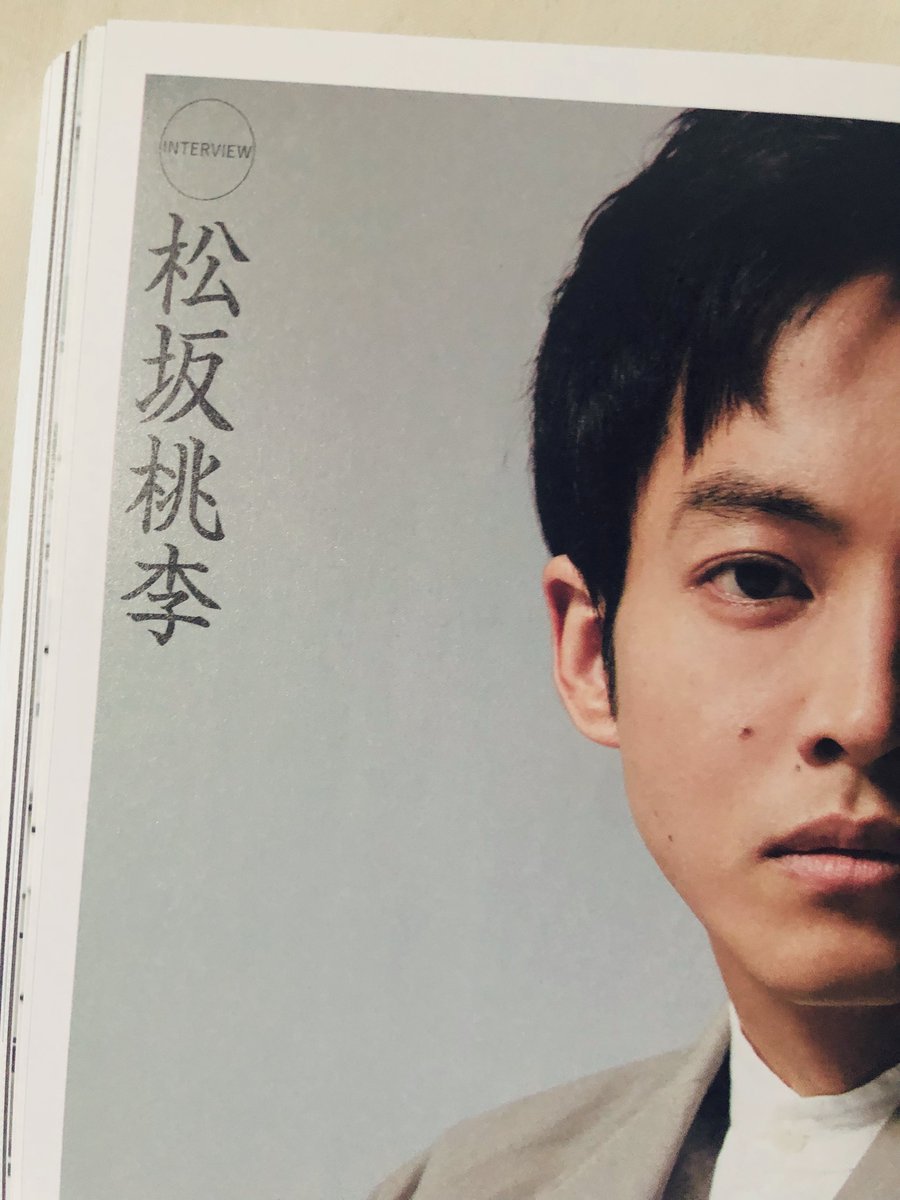
"The role, Fumi, played by Tori Matsuzaka, is a sensitive one but the immersion is unbelievable. I feel like I'm sucked into his eyes seeming to show the inside of his conflicted mind. I also feel that Suzu Hirose has become an adult woman."
Lee: People are relieved when words such as "lover" and "friend" apply to the relationship, but the relationship between Fumi and Sarasa cannot be called love. There is no sex involved. It is neither parent-child affection nor friendship. It's rejection of the definition itself. Yet, there's a solid and certain connection. In this intolerant world, their relationship that strive for mutual appreciation of each other's dignity seems to be a kind of ideal. How to bring this to the audience on a realistic level. That's the most difficult part. 
Fumi called it a "secret," but I was also worried and concerned about how to express the deep agony he is carrying and the sense of discomfort that Sarasa has been experiencing from society for a long time. 
*Spoilers*

Fumi's mother, Otoha, played by Yayako Uchida. Although she could not look at Fumi, I was impressed by the way her eyes were shaking with agitation.

Lee: My impression of Otoha is that in the novel she is more cold-hearted, a mother who does not approach Fumi at all. However, the way Yayako played her, reflected her own view of family, and her coldness was mixed with a different temperature than just coldness, making her seem more complex and confusing. I believe that the presence of mothers has been given more depth. 
Q: I felt that the absence of the fathers, as well as the mothers' close existence were questioned throughout the film.

Lee: Mothers are by far the most important part of a person's growth. That is an undeniable fact, for better or worse. I have a child myself, and as a mother, my wife is involved in some matters that, from a father's point of view, might be better left alone. I think there is an aspect of codependence between mothers and children. My own image of a mother is also very complicated and difficult to understand. In the process of making this film, I can't help but realize my own view of mothers. If I were to start talking about the difficulties I have with 'mothers', it would take about another two hours. 
***Possible inaccuracy in Technical Terms***

Q: Can you tell us about the technical highlights?

Lee: I'd like you to listen carefully to the scene where Fumi lightly taps the bowl of coffee powder. In pursuit of the softest possible impression to match Fumi's personality, sound effect director, Kenji Shibasaki recorded the sound of the bowl being tapped and then used the sound backwards, which transformed the reverberation after the tapping into a soft sound that seems to be absorbed by the listener. 
Cinematography 
Lee: I translated the original story into a short story size and sent it to cinematographer Hong Kyung Pyo. He readily agreed to work. I told Hong that I wanted to "capture the hollow space behind Fumi's eyes" in this film, and he was very conscious of that. 
***Spoilers***

Lee: There is a scene where Fumi touches Sarasa's lips, and that shot was taken in a very close-up manner. I think that even though the angle of view was unbalanced, he really went for the position where he could catch the depth of his eyes. 
Production design

Lee: Sarasa and Ryo's apartment was set up in a warehouse in Matsumoto. All other settings were mostly modified location sets.

We modified Fumi's café and the apartment where he lived as a student to have walls in blue-gray tones and floors in brown. Although there are shades of gray, Fumi's surroundings are imagined as if they were underwater in a lake. The café was a vertical structure, so we created a layer in the front half as workspace to create a sense of depth. And since there is a large, impressive window at the far end, we added a slightly blue stained glass. Finally, we decided on detailed tones and textures for the floor and wall colors working backwards from natural light from the windows. 
There's talk about Suzu and Tori's casting, they are both casted before the script. + The reason to call Hong. Other than that, that's all in the article.

Tuesday, May 3, 2022

Rurou no Tsuki - Dir. Lee Sang-il, Cinematographer Hong Kyung-Pyo/ Nikkei Entertainment

They went "100% without storyboard" and conducted in-depth rehearsals. Hong said this was first attempt at deciding on what to film on the spot after watching rehearsals.

Image
Hong said this method allowed him to use his intuition and inspiration, and produced "miraculous moments". Said one is the opening scene: when Fumi and the young Sarasa meet in the rain. (***I think above scene)

*Basically, it's the real typhoon. 
On the day of filming, the staff had to leave because of a typhoon that brought heavy rain and wind. However, Hong was inspired by the movement of clouds, swaying trees, and flowing water, and suggested Director Lee to film the scene. The crew worked hard to prepare for the bad weather, and when it came time to start shooting, the light miraculously came up, and they were able to capture the moment on camera in the first take. 
Hong: I knew this scene was a must. It rained, the wind blew, and a ray of light shone through. The images captured in this scene made it possible to express the scene in a literary and poetic way. The theme of this work is transcendental/fateful love. I was concerned with how to express the essence of the work in the transcendent nature, in the beauty of wind, rain, sky, and the sounds of birds, which we humans cannot control. 
Hong: Tori Matsuzaka and the other actors were all wonderful. I was especially impressed by the concentration of Tori and Suzu Hirose, who were able to convey their inner emotions through the camera during close-ups.
Image
Hong: The scene shot at Lake Aoki in Omachi is particularly heartbreaking but beautiful. The sequence started with the sun beating down, and it would have been best if it had clouded over and rained towards the end.
Image
Hong: but we didn't know what the weather would be like, and we had to make it through in 3 days no matter what. However, again, nature was on our side and we were able to capture the scenes we needed to capture. On the screen it looks like summer, but in reality we were shooting in autumn, so the water was cold. I think the actors had a hard time, but miraculously we were able to shoot the scene in the water in time. I was always helped by the power of nature in many of my previous shoots, but I felt it especially strongly in this one. A bird would suddenly fly in from somewhere, or the wind would blow just right. I was thinking how lucky I was, which is what a good film should be. 
Image
Dir. Lee: This time I did more than 20 takes. Not that I'm not satisfied, but in a good way, it makes me think, "Couldn't there be more?" Suzu took many takes in the police station and in the scene where she is harassed by Ryo.
Image
Lee: I especially felt Tori's power in the scene he lies to Tani. Fumi's inner world is filled with complex emotions such as sorrow, resentment, frustration, but there's a complete void in his eyes. I wondered if anyone could express such a thing but Tori arrived at right place.
Image
NikkeiE: The main highlight of the film is all-out performances, in which actors lived their roles. Hirose delicately and dynamically portrays the complex psychology of Sarasa, while Matsuzaka fascinates the viewer with his every move, as if he has been reborn as a different person.
ImageImage
Dir. Lee: Sarasa and Fumi are neither lovers nor family. They struggle between false image and real image created by the world, which is as heart-wrenching as "Villain/Rage". But, the new relationship between them is fantastical and heartwarming. It's a new frontier for me.
Image
I omitted Suzu and Tori's interviews cuz it's misleading without context. But the following is interesting. 🤣 Apparently, Dir. Lee tried out Fumi's scene himself! LOL 
Tori: It may be the biggest thing to say, "He was with me in the role." Because, in Fumi's confession scene, when I talked to Dir. Lee, he said, "I actually tried it too." He seems to have done the scene himself in the hotel (lol). He helped me that much, so I was reassured.
Image

Monday, May 2, 2022

Rurou no Tsuki - Tori Matsuzaka - GQ Japan (2022年 6月)

The novel doesn't contain a large part of the 15 years Fumi spent apart from Sarasa. But I couldn't complete the role unless I could fill in the blanks. There were so many things I had to accumulate in my mind.

Image
I had never played a role this demanding before, and I had never spent so much time worrying about it and searching so deeply into my mind. 
Dir. Lee does not give us an answer right away. He just gives us a hint and says, "Walk on your own feet from here". However, he believes in me and waited until I find the answer. So, I was relieved and could feel my way to the answer.
Image
Dir. Lee recommended me to study Moonlight (2016), Brokeback Mountain (2005) and It's Only the End of the World (2016) to find Fumi's feelings towards Sarasa. However, the more I watched them, the more I'm confused. (lol)
ImageImageImage
GQ: In the past, Matsuzaka had always delved into the character by setting a theme song and image color for the role, but the keyword "plant" (植物 Shokubutsu) became the core of his performance as Fumi. For this film, he slept over at the filming location. He said that he'll remember the process when he grasped "Oh, this may be the one!" in himself and creates the role by relying on it. 
GQ: Isn't it painful as you continue to struggle until you reach there?
Tori: I feel like the trunk of the tree will break if I expand my pursuit of the performance any further. So, I stop and extend the branches and leaves from another direction. I think this is an occupation that can take a toll on you without you even realizing it. So, I try to be as sensitive as possible so that I can quickly adjust to the situation. 
GQ: Matsuzaka is always cheerful and willing to answer questions about his role. However, he says he is embarrassed to reveal his process to his peers.

Tori: It's sort of silly, like a magician showing off his tricks, so I don't really reveal my process to other actors (lol). Rather than spreading out the details of a role and arguing about it, I believe it is better to show what each actor has in store for the scene, so that there's a good chemistry.

Rurou no Tsuki - Tori Matsuzaka - Nikkei Trendy (2022/6)

Image

Q: How do you feel about the significance of encountering such a troublesome role at this time in your early 30s?
Tori: As we get older, there are fewer opportunities to go into a demanding environment where we are exposed to pressure and distress. I think we all want to go in and follow the success stories as examples. That way, we feel safer and have a better idea of what to expect. 
I am lucky and grateful to have had this opportunity to challenge myself. Even though I don't know what the outcome will be, I think it is a very happy thing for me to have this experience of challenging myself. This also gives me the feeling that I've managed to reach the point where I can have opportunity to challenge myself as an actor. I'm sure that I will not be able to encounter such a role for the next decade or so, at least in my 30s. 
Q: What's your criteria of selecting work and how it is for "Rurou no Tsuki"?
Tori: First, one of my criteria to work on a project is my interest in what kind of reaction I would get if I threw a rock like this, and what kind of ripple effect it would create. In an environment where info is so readily available and answers are so easy to find, it has become quite difficult for us to find something "stimulating" or "shocking". With abundance of entertainment platforms, the audience becomes more sophisticated and selective. Thus, as a person on delivery side, I do not want to deliver something unless it is of a high quality with a well-conveyed message. "Rurou no Tsuki" is a work with a strong message. It depicts something that does not easily fit into "any" existing society category.
(Note: any) 
I wish this film serves as a kind of hope if such thing really exists somewhere. I'd say "Having an existence where we can understand and accept each other,.. can lead to how comfortable and happy we are with each other,. and how necessary it is for us to live our lives." 
At the same time, I feel that there'll be considerable controversy. The relationship between Sarasa and Fumi may be rejected, or there'll be a notion that it should not be touched, so I understand that some people may not be able to accept it. However, I think that everyone is free to take it however they want and it's okay to feel however they want. I hope to broaden the viewer's sense of values even if by an iota, so I'm most eager to touch their thoughts and feelings, whatever their impressions may be. I think if people have a moment of their perspective broadened even a little by thinking, "What Fumi has is a little different from me, but there are some like him.", my life will be enriched and I'll have motivation to try something new. I believe that creating artwork plays a small role in creating such a trigger. That's why I'm interested in artworks with a message. I think I'll continue to challenge myself in the future. 

Friday, April 29, 2022

Rurou no Tsuki - Tori Matsuzaka/ ELLE Japon (2022年6月)Excerpt

難役に模索した日々。

衝撃作でつかんだ新境地


1. He wrote a diary for the 15 years that Fumi spent apart from Sarasa.

Tori: Loneliness is something that everyone carries throughout our life and cannot be shared with others. However, it is a part of who we are, and I don't think it is necessarily a negative thing. It is because of loneliness that we can feel the happiness of being with someone. 
Tori: After being separated from Sarasa, Fumi is alone again, but I think his loneliness is different from before. When they meet again, I myself felt "I am glad he held on to this irreplaceable bond". It was as if I had found a place of strength. 
Tori: I believe that this is hope for those who wish for this kind of relationship to exist. Even if people don't understand us, we are happy together, and that's all that matters. 
Tori: I want to be an actor who has many opportunities to "reunite" with people I worked with in the past. I'm also scared because it's a test of how I spend my time since the last time I was with them. 
Tori: That's why I'm going to work on each production with a strong focus. I feel that the experience I gained from this film will support me as "I can overcome any situation". 

Wednesday, April 27, 2022

Rurou no Tsuki/ Wandering - Tori Matsuzaka/ Recap from Kinema Junpo (2022年5月)

The view from normal fans, film writers and film studies people are so different! They even have a different scene for "impressive" scene.

Image
Said the most memorable scene is Fumi's hands when they reunite: the blood flow through his fingers to nails and camera pans to his face?
Image
Also Tori said he wanted to look like a plant and very relieved when Dir. Lee said "You look like a plant." when they first met for rehearsals.

Tori said with this film, he didn't get any sense of accomplishment. He just thinks "there's no ceiling in this job." 
This is really artsy and technical interview. Also have details about filming and auditions. I love it. Will add more later. 
Dir. Lee invited Tori to audition the child Sarasa. At first, they auditioned 9-year olds. Said they're too young to communicate. So, they re-did the audition all over again with older ones and changed the Sarasa's age to 10 in the movie. (*Tamaki is 12) 
Tori said Tamaki and Suzu are completely synced as Sarasa. Dir. Lee gave him 2 weeks time-off for 15 years time skip and when he got back to set, Suzu just came in to cafe and he thought "Oh, it's Sarasa!" and time skip is done. 
Calico is a vertically long, narrow cafe. When Dir. Lee found the place, they thought it's too narrow to shoot in CinemaScope (Note: Wide, 2.66:1). But Hong Kyung Pyo said he has filming exp in a train (*Snowpiercer) and they went ahead with the place.

Kinema Junpo praised Hong's cinematography a lot. Especially praised that his talent of using light and atmosphere helped capture Fumi character to the fullest since Fumi has almost no dialogues in the film.

Rurou no Tsuki - Dialogue between Mariko Hayashi & Suzu Hirose


ImageImage

Hayashi: When I saw the film, I found that Dir. Lee left out a lot of things. Eg, what happened at Sarasa aunt's place. He made you say it through the lines.

Suzu: Yes, there were many parts like that.

Hayashi: Did you read this book? 

Suzu: I read it when I was asked to do the project.

Hayashi: Didn't you think it was a little difficult to play the role?

Suzu: I read the book knowing that I was going to play Sarasa, so there were many hints for me to play the role. 

Hayashi: The way you read a book in the cafe was really beautiful, and I thought you showed her essence.

(They recapped the dynamic between the 4 characters) 

Hayashi: Sarasa and Fumi are like soul twins, and I thought it'd be impossible to separate them. Did you and Tori Matsuzaka-san work together perfectly from the beginning? 

Suzu: I started working with Tori-san in the middle of production, but he is very flexible in his sensibilities and acceptance. His brain is so flexible that he accepts anything I do and fits in easily. I thought, "He's the real Fumi!"

Hayashi: I was also surprised as if Fumi came out of the book. He has such a dark and mysterious feel.

Suzu: He's scary. I don't really know who he is (lol).

Hayashi: Your eyes were wonderful. When you're beaten by Ryo, I could see your eyes through the space between his fingers, and your eyes tell so many things. I thought "Suzu has become such an amazing actress."

Suzu: Thank you very much. 

Hayashi: And the girl who played Sarasa's childhood (Tamaki Shiratori) looked so much like you that at first I thought you were playing her. 

Suzu: Really? Actually, I was told that the way she cried while dreaming was exactly the same. I did not see Tamaki on the set, and she may not know how I cry. So when people around me told me, I thought, "Oh.."

Hayashi: You mentioned that you and Matsuzaka-san started working together in the middle of the production, but isn't it difficult to suddenly bring the tension to that level?

Suzu: Yes. Tori had already shot the scenes with Sarasa in her childhood, so he has experienced his life with Sarasa. I started the scenes with Fumi as the grown-up Sarasa in the middle of the film, so Dir. Lee said to me, "Fumi and you have a temperature difference. Why don't you ask Tori-kun about the time he spent with Tamaki?". So, I e-mailed Tori and asked him about it. 

Hayashi: And then?

Suzu: He just replied "I can only put it in an abstract way, but it was very free.". Then, I thought "Free, huh? How broad the world was for these two". Then, I relied on those words.

Hayashi: In this film, there are many scenes of wind, it makes me feel as if I've gained freedom, and I can understand why Tori-san said "freedom".

(About Dir. Lee and Hong)

Suzu: When I saw the first preview, I thought, "Oh no! I am in trouble!"

Hayashi: Why?

Suzu: Tori-san was so wonderful that I was moved and thought, "I'm in trouble," so I ran away and left without giving Dir. Lee any feedback (lol).

Hayashi: That's not true. You gave a wonderful performance!


Thursday, April 21, 2022

Rurou no Tsuki - Suzu Hirose (Barfout! 2022年5月)


Image
Q: In the beginning of the film, you seem to be watching, but I was impressed by your eyes that were not "seeing" anything.
Suzu: I think that Sarasa's body instinctively sees only Fumi as a target. Also, Sarasa liked her time with Fumi and herself with Fumi, though she was not that conscious of it. But until she met Fumi again, Sarasa had been living a life of deceiving and lying about various things and to protect only her environment. 
Q: Sarasa has been apart for 15 years and still can't forget the presence of the only one person in her life. I wonder what she was thinking.
Suzu: During those 15 years, I am sure that there were many times that she thought she should forget. She made a choice to stay with Ryo-kun, but I thought that the moment she heard Fumi's voice was when all these things became irrelevant. I could tell that it was just hearing his voice. I thought it was so big that when she noticed it, she knew he was there again. 
Q: When the lights came from Fumi's apartment, Sarasa was happy to see Fumi having a normal life there. I can't forget the scene when Sarasa said to herself, "I'm so happy for Fumi".
Suzu: I had a hard time with that scene. At first, I couldn't speak frankly like that. 
Q: I felt that you really said "I'm glad" without any hesitation.
Suzu: I didn't want to show some kind of strange jealousy. Yes, I thought it would be better that way, but I couldn't be that honest emotionally (lol). 
Q: What do you feel about the relationship between Sarasa and Fumi?
Suzu: It is not hard to understand, and I wish I had someone like that. I envy them. I think that Sarasa was most encouraged by Fumi, who did not deny or affirm her feelings, but rather welcomed her. Knowing that kind of relationship, I thought that it would be great if I could meet someone who could be like that. 
Q: How do you feel during the filming?
Suzu: My emotions move when I interact with people. There were moments when I could feel the warmth of the other person, so it was easier to play, or I could feel the details. I struggled with my anger and unforgiving emotions. 
Q: You mentioned that you have feelings when interacting with people. What was your impression of Matsuzaka?
Suzu: Tori-san is very flexible. Even if he is stuck in the tunnel for a long time, he is a person who never gives up until the end, which I respect him as a person. When I decided to do Rurou no tsuki, I was working with him at the same time. I started by liking him as a person, and then, on the set, we were together but kept a distance. I don't know if we were communicating or not, but I think we had the nuance that it would be nice if we felt the same way. I was committed to it, but I honestly wasn't sure if Fumi was the same. 
Q: It's not a poker face, but Fumi definitely has a feel that although he accepted you, it was difficult to see his true feelings. 
Suzu: I don't know if I should touch him or not. If I touch him, it seems as if he might easily shatter into pieces. I think I said myself that he understands me, but there were times when I wondered what Fumi's looking at. 
Q: Do you think that Sarasa's feelings for Fumi are similar to attraction?
Suzu: Not "attraction", but Sarasa is Fumi. He was the one who let her be free. I think it was her salvation and life at the time, and I am sure that feeling will not change when she becomes an adult. 
Suzu: There are times when we ask others to decide for us, to choose with us, or to support us. But rather than that, I think "I am who I am" is what Sarasa and Fumi want to convey the most this time. Dir. Lee Sang-il even said, "I want you to remember Fumi's words that 'You belong to yourself, Don't let anyone own you.". I think that these words are something that everyone, regardless of generation, can somehow understand. 
Q: When do you feel these words in your own life?
Suzu: When Dir. Lee told me that (LOL). I was talking with him and he said, "I wish I could say Fumi's lines to you" (lol). 
Disclaimer: Suzu answered every question without any pronouns to differentiate Sarasa or herself. Since english language can't "not use" pronouns, I used "she/her" for what I think she was talking about Sarasa. Might be wrong in that sense.